Pool Leak Detection in Voorhees, NJ
Specialized electronic and dye testing to isolate hidden water loss in residential swimming pools. When you need certified pool leak detection Voorhees NJ homeowners trust, we identify whether the failure is in your vinyl liner, concrete shell, or underground plumbing lines.
- Precise pressure testing of buried skimmer, return, and main drain lines
- Targeted dye testing around light niches, tile lines, and fittings
- Serving backyard pools in Kirkwood, Echelon, and throughout Voorhees
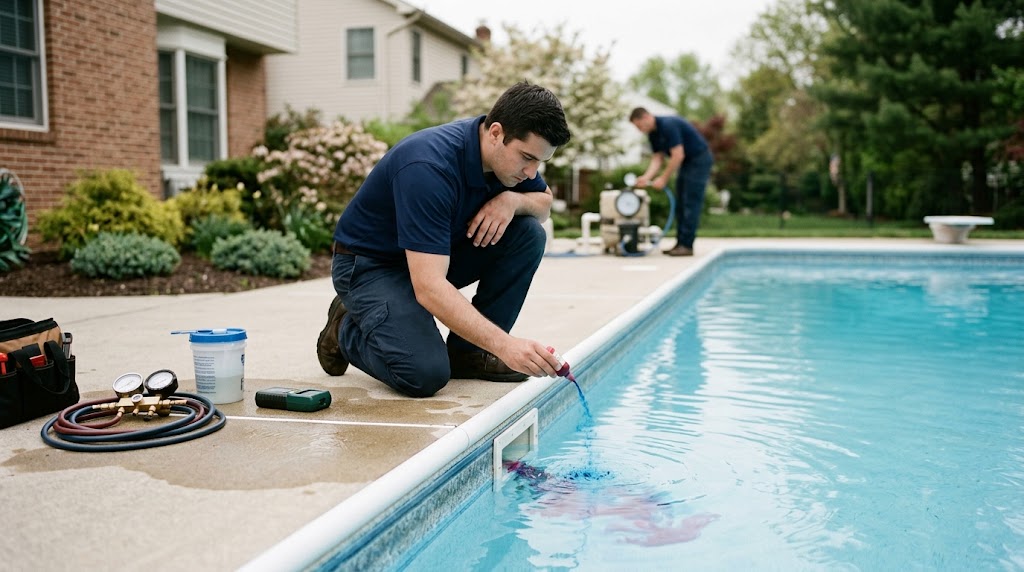
Normal Evaporation vs. An Inground Pool Leak
During warm Camden County summers, swimming pools naturally lose water to sun exposure, wind evaporation, and active splashing. A typical inground pool loses roughly one-eighth to one-quarter of an inch of water per day under standard weather conditions. However, when you find yourself adding inches of water multiple times a week or your chemical balances constantly crash, you are dealing with an inground pool leak Voorhees homeowners must address promptly.
The 24-Hour Bucket Test: Before calling for diagnostics, property owners can perform a simple bucket test:
- Place a 5-gallon bucket filled with pool water on the second pool step.
- Mark the water level inside the bucket and the pool water level outside on the bucket's rim.
- Run the pump normally for 24 hours. If the outside pool level drops substantially more than the bucket interior, a structural or plumbing leak is active.
Uncontrolled pool leaks saturate the sandy sub-base beneath concrete pool decking, causing deck slabs to crack, tilt, or undermine the pool shell itself.
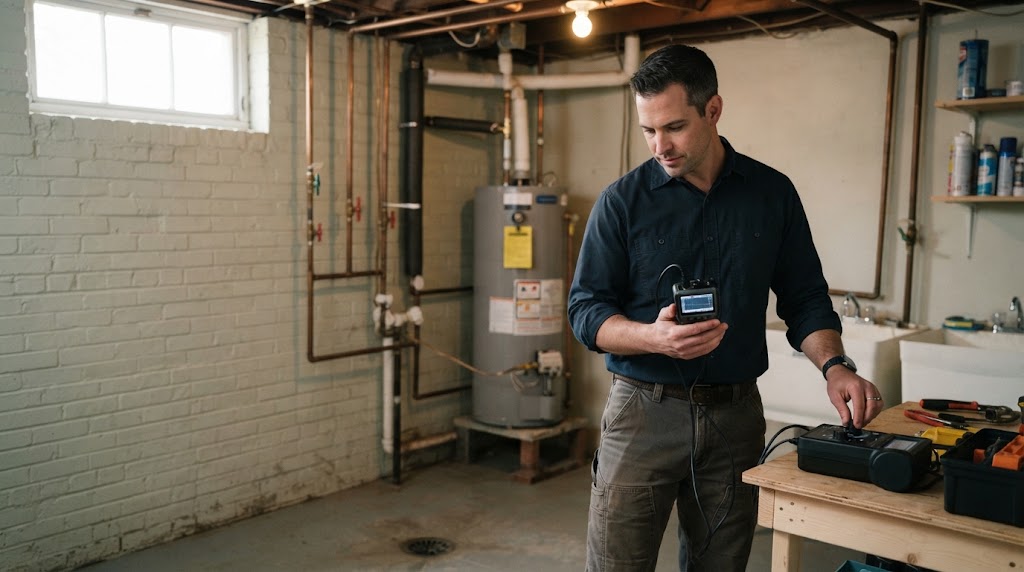
Comprehensive Pool Diagnostic Testing Protocols
We combine mechanical pressure testing with underwater structural inspection to deliver an exact diagnosis of your pool plumbing leak Voorhees NJ issues.
Pressure Testing Buried Plumbing
We seal and pressurize individual suction and return lines with water and inert gas. If a pressure gauge drops on a closed line, we isolate the exact underground run beneath your concrete pool deck.
Precision Dye Testing
Using concentrated, water-soluble fluorescein dye, our technicians test structural seams, skimmer throats, return eyeball fittings, and underwater light niches. Active leaks visibly draw the dye into the crack.
Post-Winter Freeze Inspections
New Jersey winterizing failures often show up in spring. If underground lines were not fully purged, expanding ice cracks PVC pipes. We test spring openings to locate damage before you waste water and chemicals.
Losing More Than 1/4 Inch of Pool Water Daily?
Stop paying for wasted water and expensive balancing chemicals. Schedule professional pool leak testing with our Voorhees team today.
+1 (201) 510-1615 Call (201) 510-1615Common Failure Points & Targeted Solutions
Identifying the precise leak point prevents broad-scale demolition of your decorative patio concrete or stamped pavers:
- Skimmer Throat Separations: Movement between the pool shell and surrounding concrete deck frequently cracks the plastic skimmer mouth. These can often be sealed with specialized two-part underwater epoxies.
- Conduit Leaks at Light Niches: Water often leaks through the unsealed electrical conduit pipe behind the pool light. Sealing the niche cord prevents continuous drainage.
- Subsurface Pipe Fissures: Buried PVC suction and return pipes can crack from ground settling. Acoustic locating pinpoints the exact deck paver to lift for swimming pool leak repair Voorhees work.
Cost Factors Explained: Total repair investment depends on whether the issue is a simple underwater structural seam requiring specialized epoxy, a torn vinyl liner requiring localized patching, or an underground line buried beneath reinforced concrete decking requiring saw-cutting and repiping.
For related subterranean water concerns, check our water line leak detection or sprinkler leak detection services.
Preventing Pool Structure Damage
Persistent underground water leaks around your pool can trigger serious structural issues:
- Deck Undermining: Water washing through sandy subsoil creates voids beneath concrete pool aprons, causing sinking and trip hazards.
- Liner Floating: Underground water accumulation outside vinyl pool walls pushes liners upward, causing unsightly wrinkles and seam separations.
- Equipment Burnout: Low pool water levels suck air into skimmers, causing pool pumps and filtration motors to overheat and seize.
Frequently Asked Questions About Pool Leak Detection
Common questions regarding pool diagnostics in Camden County.
How do I perform the bucket test to confirm a pool leak?
Fill a 5-gallon bucket with pool water and set it on the first pool step. Mark the water levels both inside the bucket and outside on the pool shell. After 24 hours of normal operation, measure both drops. If the pool water drops significantly faster than the bucket water, your pool has an active leak rather than natural evaporation.
What are the most common leak locations in Voorhees inground pools?
The most frequent failure points are skimmer throat separations from concrete coping, cracked plastic light niches, underground return line elbows, and hydrostatic relief valves in main drains.
Why do pool plumbing lines crack after New Jersey winters?
If underground suction or return lines are improperly blown out with compressed air during autumn winterizing, standing water freezes, expands, and splits PVC elbows buried beneath pool concrete decking.
Does pool leak detection require draining the pool?
No. In fact, pools must remain filled to normal operating levels so hydrostatic pressure keeps water flowing through structural cracks and dye testing can be performed accurately.
Schedule Pool Leak Testing in Voorhees Today
Save your pool deck and stop refilling your pool every few days. Contact NJ Leak Detection to speak directly with an experienced diagnostic technician.
Call (201) 510-1615